
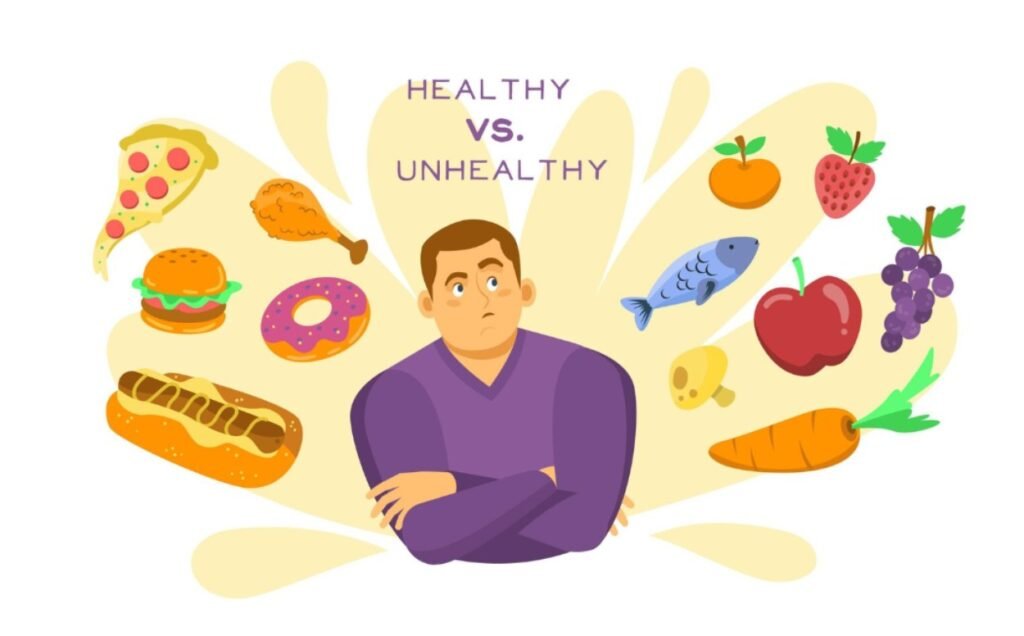
Many people think improving their diet means giving up their favourite comfort foods entirely. In reality, small adjustments and mindful choices can make your meals healthier without losing the foods you love. The key is balance and moderation.
Here are practical strategies to improve your diet while still enjoying your favourite treats.
Focus on Portion Control
One of the simplest ways to eat healthier without cutting out comfort foods is to watch your portion sizes. For example:
- Enjoy a smaller slice of cake instead of a whole piece
- Serve chips in a bowl rather than straight from the packet
- Share a dessert with a friend instead of eating it alone
Portion control allows you to enjoy your favourite foods without overloading on calories or sugar.
Make Simple Swaps
You don’t need to completely avoid comfort foods. You can swap ingredients for healthier alternatives:
- Swap white pasta for wholegrain or legume-based pasta
- Use natural yoghurt instead of cream in sauces or desserts
- Try baked chips instead of fried ones
- Include vegetables or pulses in traditionally carb-heavy dishes
These swaps maintain flavour while improving the nutritional value of your meals.
Include More Protein and Fibre
Adding protein and fibre to your meals helps you feel fuller for longer, which can naturally reduce cravings for unhealthy snacks. Ideas include:
- Adding beans or lentils to soups and stews
- Snacking on nuts or seeds instead of sugary snacks
- Incorporating eggs, fish, or chicken into meals
- Using whole grains like quinoa or brown rice
Mindful Eating
Being aware of what you eat and savouring each bite can improve your relationship with food. Mindful eating tips include:
- Eating slowly and without distractions like TV or phones
- Paying attention to hunger and fullness cues
- Choosing treats deliberately rather than out of habit or boredom
Mindful eating helps prevent overeating and encourages healthier choices naturally.
Plan Your Meals
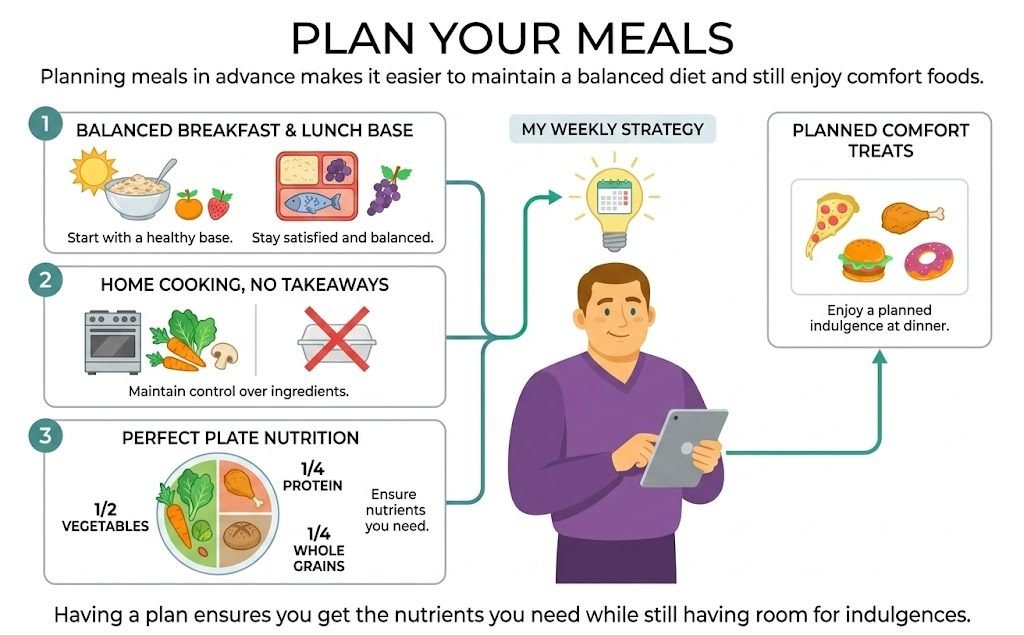
Planning meals in advance makes it easier to maintain a balanced diet and still enjoy comfort foods. Consider:
- Preparing a healthy breakfast and lunch so you can enjoy a treat at dinner
- Cooking at home instead of relying on takeaways
- Including a mix of vegetables, protein, and whole grains in each meal
Having a plan ensures you get the nutrients you need while still having room for indulgences.
Treat Comfort Foods as Occasional Rewards
Rather than banning comfort foods, use them as a treat:
- Have a favourite snack on weekends only
- Set aside small amounts to enjoy after a workout or a busy day
- Keep indulgences occasional, so they feel special
This approach reduces guilt and prevents feelings of deprivation that often lead to overeating.
Healthy Cooking Techniques
Changing how you prepare your favourite foods can make a big difference. Try:
- Baking or grilling instead of frying
- Using herbs and spices for flavour instead of extra salt or sugar
- Making homemade sauces and dressings to control sugar and fat
These simple changes maintain the taste you love while improving nutrition.
Realistic Goal Setting
Improving your diet does not happen overnight. Set realistic goals:
- Start by increasing vegetable intake gradually
- Swap one processed snack for a healthier option each week
- Track progress in a simple journal or app
Small, consistent changes are easier to stick with and lead to lasting results.
Example Day of Balanced Eating
Here’s how you can balance comfort foods with healthier options in a typical day:
- Breakfast: Porridge with fruit and a drizzle of honey
- Snack: Handful of mixed nuts
- Lunch: Chicken and vegetable stir-fry with brown rice
- Snack: A small piece of chocolate or biscuit
- Dinner: Homemade pizza with wholegrain base and extra vegetables
This plan shows that you can enjoy treats while still eating a nutrient-rich diet.
Final Thoughts
Improving your diet does not mean completely giving up your favourite comfort foods. With mindful eating, portion control, smart swaps, and balanced meal planning, you can make healthier choices while still enjoying the foods you love.
Making these small changes gradually can lead to long-term improvements in health and wellbeing without feeling restricted or deprived.