


Somewhere between the tenth serum you bought because someone on social media said it changed their skin, and the third new haircare method promising results in a week, most people hit a quiet wall of exhaustion. Not dramatic burnout, just a tired, low-grade feeling of always being slightly behind on beauty trends that seem to change every few weeks. Slow Beauty starts when you stop chasing every new trend and give yourself time to understand what actually supports your routine, confidence, and daily habits.
This article looks at what genuinely happens, physically and mentally, when someone stops chasing every new beauty trend for a full ninety days, and why that timeframe specifically matters more than people expect.
Why Ninety Days Is The Number That Actually Matters
Ninety days isn’t a randomly chosen number for dramatic effect. It lines up with actual biological timelines for skin cell turnover, hair growth cycles, and the point where most trend-driven habits either prove themselves or reveal they were never doing much at all.
Skin cell turnover, the process where new skin cells replace old ones, generally takes around four to six weeks for younger skin and closer to two to three months for more mature skin. This means any genuine change from a skincare habit typically needs at least this much time to become visible, which is far longer than most trends stick around before being replaced by the next one.
| Beauty Process | Rough Timeline For Real Change |
|---|---|
| Skin cell turnover (younger skin) | Four to six weeks |
| Skin cell turnover (more mature skin) | Eight to twelve weeks |
| Visible hair growth changes | Two to three months minimum |
| Nail growth from base to tip | Roughly three to six months |
A dermatologist who studies skin barrier health explained why this specific timeframe holds real weight: “Most people abandon a skincare routine within two to three weeks because they don’t see instant results, right around the time actual cellular change is just beginning. Ninety days genuinely allows enough time to separate what’s working from what was just marketing.”
What Chasing Trends Is Actually Doing To Your Skin And Hair
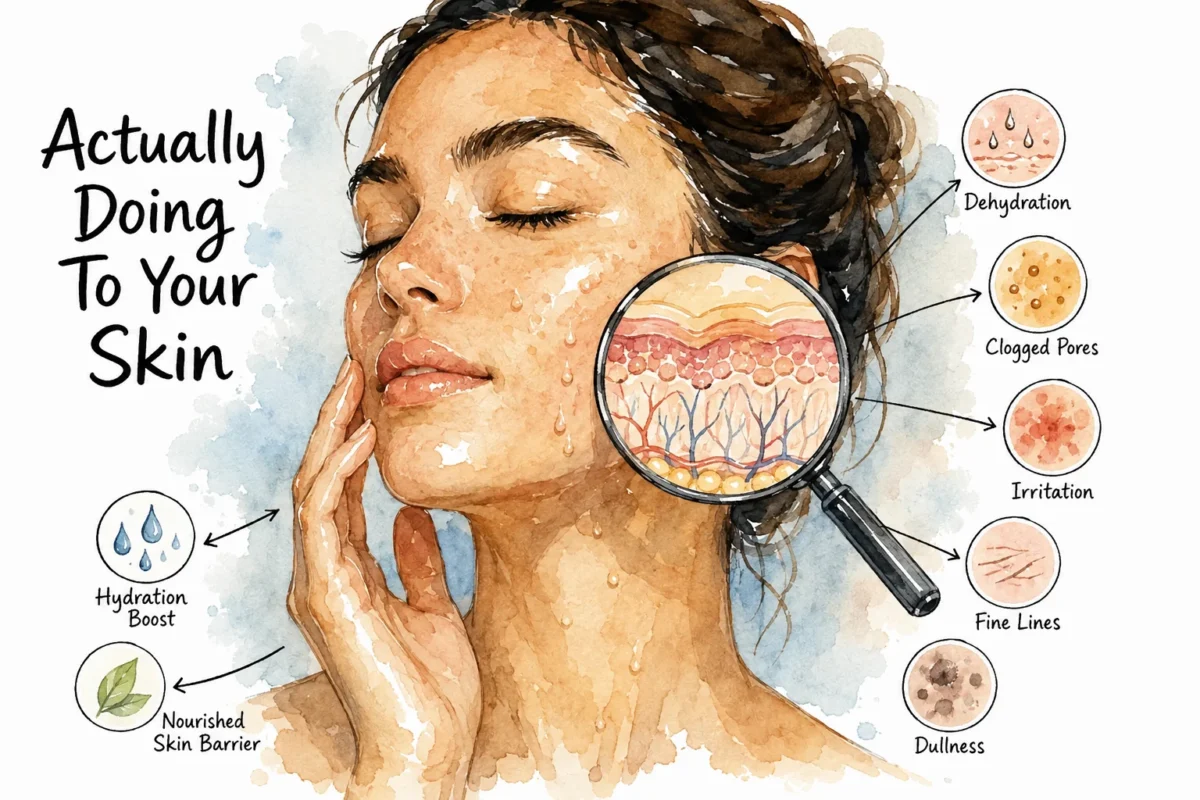
Before looking at what stopping accomplishes, it helps to understand what constant trend-switching does in the first place, since this explains why the ninety-day pause tends to produce such noticeable results for so many people.
Constantly introducing new active ingredients, switching cleansers, trying new hair treatments, and layering different trending products means skin and hair rarely get a stable, consistent environment long enough to actually respond to any single approach. This constant switching often creates a low-grade state of irritation or imbalance that people mistake for having “difficult” skin or hair, when it’s really a reaction to constant change itself.
| Trend-Chasing Pattern | Effect On Skin And Hair |
|---|---|
| New active ingredient every few weeks | Skin barrier never fully adjusts to any single product |
| Constantly switching cleansers | Inconsistent oil production, ongoing irritation |
| Trying new hair treatments frequently | Hair never settles into a stable, healthy pattern |
| Layering multiple trending products | Increased risk of product interactions and reactions |
The First Two Weeks: What Actually Happens When You Stop
The initial period of stepping back from trend-chasing often feels surprisingly uncomfortable, both physically and psychologically, and understanding this upfront prevents people from giving up right when things are about to genuinely improve.
Skin often goes through a brief adjustment period, sometimes called purging in skincare circles, though this term gets overused and misapplied constantly online. Genuine adjustment involves skin recalibrating its own oil production and cell turnover after being artificially manipulated by constant active ingredient switching, which can look like minor breakouts or temporary dullness before things settle.
| Days One To Fourteen | What’s Actually Happening |
|---|---|
| Days one to three | Skin adjusting to reduced product variety |
| Days four to seven | Possible minor breakouts as oil production recalibrates |
| Days eight to fourteen | Early signs of stabilization beginning |
A licensed esthetician who works with clients recovering from over-exfoliated, over-treated skin shared an honest observation: “The first two weeks are genuinely the hardest part, both because skin is adjusting and because the psychological urge to add something new is strongest right at the start. Most people quit exactly when their skin is on the verge of actually stabilizing.”
Why The Psychological Withdrawal Is Real, Not Exaggerated
Beyond the physical skin adjustment, there’s a genuine psychological component to stepping back from trend-chasing that deserves honest attention, since dismissing this makes people feel like something is wrong with them when it’s actually a well-documented pattern.
Constant exposure to beauty content creates something similar to a low-level anxiety response, a nagging feeling that you’re missing out on a better product or method that’s actively helping other people right now. This isn’t weakness, it’s a predictable response to an environment specifically designed to create ongoing dissatisfaction with your current routine.
| Common Psychological Response | Why It Happens |
|---|---|
| Anxiety about missing a “better” product | Constant exposure to new trending items online |
| Feeling like your routine isn’t “enough” | Comparison to curated, often exaggerated results online |
| Urge to add just one more product | Habit formed from months or years of constant switching |
| Doubt creeping in around week three or four | Peak point where old habits try to reassert themselves |
Weeks Three To Six: The Turning Point Most People Miss
This middle stretch is genuinely where most people either commit to seeing the full ninety days through or quietly slip back into old trend-chasing habits, often without fully realizing they’re doing it.
By this point, skin typically starts showing genuine signs of stabilization, assuming the initial adjustment period has passed. Oil production tends to even out, sensitivity often decreases, and many people report their skin simply looking calmer, even if it’s not dramatically transformed yet.
| Weeks Three To Six | Typical Progress |
|---|---|
| Week three | Oil production starting to normalize |
| Week four | Reduced overall sensitivity and reactivity |
| Week five | Skin tone appears calmer, more even |
| Week six | Early confidence building in the simplified routine |
A skincare formulator who has studied long-term ingredient consistency shared a pattern worth remembering: “There’s a specific psychological trap around week four, where skin looks decent but not dramatically improved yet, and this is exactly when people start second-guessing the whole approach and reaching for something new. Pushing through this exact window is where the real payoff usually starts.”
What Happens To Hair During This Same Ninety-Day Period
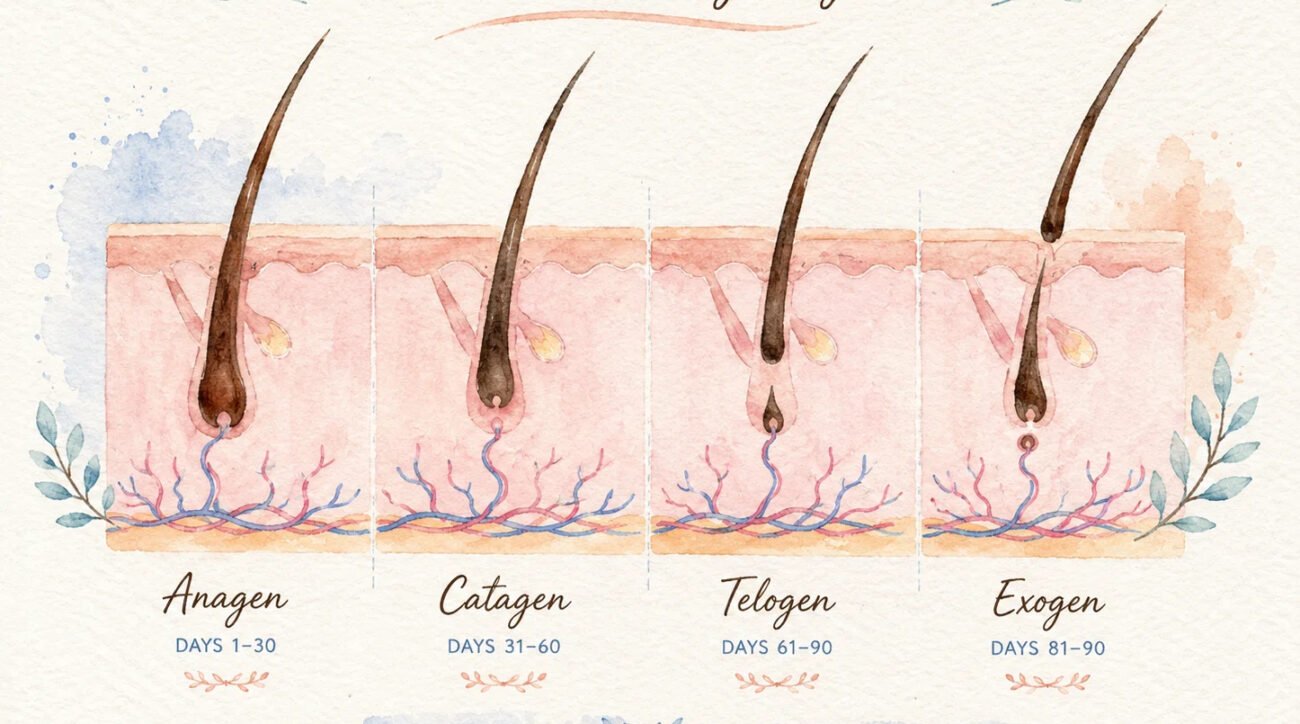
Hair follows a somewhat different but equally important pattern during this period, since hair health responds to consistency in a way that’s often even more dramatic than skin, given how frequently people switch shampoos, treatments, and styling methods based on trends.
Constant switching between different shampoo formulas, treatment masks, and styling products can strip hair’s natural protective oils repeatedly before they have a chance to rebuild, leading to a cycle of dryness that gets misinterpreted as needing even more products rather than needing consistency.
| Hair Trend-Chasing Pattern | Result Over Time |
|---|---|
| Switching shampoo formulas frequently | Scalp never establishes a stable oil balance |
| Trying every trending hair mask or treatment | Product buildup, inconsistent results |
| Constantly changing heat styling methods | Uneven damage patterns, harder to address consistently |
| Following every viral hair hack | Rarely enough consistency for genuine improvement |
The Financial Reality Nobody Talks About In Beauty Content
Beyond the physical and psychological effects, there’s a significant financial dimension to trend-chasing that rarely gets honest attention, since beauty content creators and brands both benefit from constant purchasing behavior, not from viewers actually settling into a stable, minimal routine.
Tracking actual spending across ninety days of trend-chasing compared to ninety days of a simplified, consistent routine reveals a genuinely significant difference, one that many people never calculate until they deliberately compare the two approaches side by side.
| Ninety Days Of Trend-Chasing | Ninety Days Of Simplified Consistency |
|---|---|
| Multiple new product purchases monthly | Minimal repurchasing of established basics |
| Higher overall spending on unused or abandoned products | Lower spending, less product waste |
| Frequent partial-use bottles left unfinished | Products used consistently until finished |
| Higher cumulative cost with less consistent results | Lower cost with more consistent, visible results |
A personal finance writer who covers beauty spending patterns shared a calculation many readers find eye-opening: “When people actually track their beauty spending during a trend-chasing period versus a simplified period, the difference is often substantial, sometimes literally hundreds saved over just three months, simply from not constantly buying new products based on trending content.”
What Genuinely Improves By Day Ninety
By the time the full ninety days have passed, assuming the initial adjustment period was pushed through and consistency was genuinely maintained, most people report a fairly consistent set of improvements across both skin and hair.
Skin barrier function typically shows real improvement, meaning less reactivity to environmental factors like weather changes or mild product ingredients that previously caused irritation. Hair often shows improved overall texture and reduced breakage, since it’s finally had consistent time to rebuild its natural protective barrier without constant disruption.
| Day Ninety Improvement | What It Looks Like |
|---|---|
| Improved skin barrier function | Less reactivity to weather and mild ingredients |
| More even skin tone | Reduced redness and blotchiness overall |
| Improved hair texture | Softer, less brittle feel |
| Reduced hair breakage | Noticeably less shedding during brushing or washing |
| Increased confidence in routine | Less anxiety about missing a “better” product |
Why Slow Beauty Isn’t The Same As Doing Nothing
It’s worth clarifying directly that slow beauty, the approach of stepping back from constant trend-chasing, doesn’t mean abandoning skincare or haircare altogether, doing nothing, and hoping for the best. It means choosing a smaller set of genuinely suited products and committing to them consistently.
The difference lies entirely in intentionality and consistency, not in doing less overall effort. A well-chosen, simplified routine still involves regular cleansing, appropriate treatment products for specific concerns, and proper protection, just without the constant churn of new products interrupting the process before it can actually work.
| Doing Nothing | Slow, Intentional Beauty |
|---|---|
| No routine or care at all | A deliberately chosen, consistent routine |
| Ignoring skin and hair needs entirely | Addressing genuine needs with fewer, better-suited products |
| Passive neglect | Active, patient consistency |
| No real strategy | Clear, intentional strategy maintained over time |
Common Mistakes People Make Trying This Ninety-Day Approach
Even with good intentions, a few predictable mistakes tend to derail this process for many people, often stemming from either impatience or misunderstanding what the approach actually requires.
One frequent mistake is interpreting any minor skin or hair fluctuation during the adjustment period as proof the approach isn’t working, leading to premature abandonment right before genuine results would have appeared. Another common mistake is confusing slow beauty with doing absolutely nothing, leading to genuine neglect rather than intentional simplification.
- Quitting during the initial adjustment period due to minor fluctuations
- Confusing intentional simplification with complete neglect
- Adding “just one” trending product partway through, resetting the consistency clock
- Expecting dramatic transformation rather than gradual, genuine improvement
- Comparing your ninety-day progress to heavily filtered or exaggerated online content
| Mistake | Better Approach |
|---|---|
| Quitting during initial adjustment | Understanding this phase as normal and temporary |
| Confusing simplification with neglect | Maintaining a smaller but genuinely consistent routine |
| Adding one new trending product mid-process | Committing fully to the chosen ninety-day routine |
| Expecting dramatic transformation | Expecting gradual, genuine, sustainable improvement |
| Comparing to filtered online content | Focusing on your own honest, unfiltered progress |
How To Actually Choose What Stays In Your Ninety-Day Routine
Since the goal isn’t doing nothing but rather choosing wisely, it helps to have a clear method for deciding which products genuinely deserve a spot in this simplified, consistent routine, rather than randomly picking whatever happens to already be in your bathroom.
Prioritize products that address your actual, ongoing concerns rather than trending concerns you don’t genuinely have. Choose gentle, well-formulated basics for cleansing and moisturizing, and select one targeted treatment ingredient suited specifically to your primary concern, rather than multiple competing actives.
| Selection Criteria | Why It Matters |
|---|---|
| Addresses your actual, ongoing concern | Avoids treating trending concerns you don’t genuinely have |
| Gentle, well-formulated basics | Reduces irritation risk during the consistency period |
| One targeted treatment ingredient | Allows genuine assessment of that ingredient’s effectiveness |
| Suited to your specific skin or hair type | Increases likelihood of genuine compatibility |
Journaling Your Ninety Days: Why Tracking Matters More Than Memory
A significant number of people who attempt this approach struggle to accurately assess their own progress simply because memory is unreliable over long periods, especially for gradual changes that happen slowly enough to become the new normal without being consciously noticed.
Keeping a simple, brief record, whether through photos taken in consistent lighting or short written notes about how skin or hair feels each week, provides a much more accurate picture of actual change than relying purely on memory, which tends to normalize gradual improvement without registering it consciously.
| Without Tracking | With Simple Tracking |
|---|---|
| Gradual improvement often goes unnoticed | Clear, visible record of actual change over time |
| Memory tends to normalize slow change | Objective comparison between week one and week twelve |
| Harder to identify what’s genuinely working | Easier to connect specific habits to specific results |
| More likely to doubt progress and quit early | More likely to recognize genuine progress and continue |
Why This Approach Particularly Benefits People With Sensitive Or Reactive Skin
While slow beauty benefits most people, it tends to show the most dramatic results specifically for those with sensitive or reactive skin, since this skin type is most negatively affected by constant product switching and most positively affected by genuine consistency.
Reactive skin often exists in a chronic state of low-grade inflammation from constant exposure to new ingredients, fragrances, and formulations, never getting the chance to establish a calm baseline. Ninety days of genuine consistency often allows this chronic reactivity to settle in a way that feels almost dramatic compared to previous experience.
| Skin Type | Typical Response To Slow Beauty Approach |
|---|---|
| Sensitive or reactive skin | Often the most dramatic improvement, reduced chronic irritation |
| Oily or acne-prone skin | Improved oil regulation once switching stops disrupting balance |
| Dry skin | Better barrier function, improved moisture retention over time |
| Combination skin | More balanced overall behavior across different facial zones |
What This Approach Reveals About Your Actual Skin And Hair Needs
One of the most valuable, often overlooked outcomes of this ninety-day period is the genuine clarity it provides about what your skin and hair actually need, separate from what trending content suggests everyone needs regardless of individual variation.
By removing the constant noise of new products and trends, people often discover their actual skin or hair concerns are simpler and fewer than they’d been led to believe, since much of the perceived need for elaborate routines was manufactured by constant exposure to marketing rather than genuine skin or hair requirements.
| Before The Ninety Days | After The Ninety Days |
|---|---|
| Believing skin needs constant new intervention | Recognizing skin needs consistency more than variety |
| Assuming multiple concerns need addressing simultaneously | Identifying one or two genuine, primary concerns |
| Confusion about what’s actually working | Clear understanding of which specific habits genuinely help |
| Reliance on external trends to guide routine | Confidence in personally verified, consistent choices |
How To Handle Social Pressure And Content Exposure During This Period
Since beauty content and trending products are difficult to avoid entirely, especially on social media, it helps to have a realistic plan for managing this exposure without it undermining your ninety-day commitment.
Consider temporarily reducing exposure to heavy beauty content accounts during this period, not permanently, but enough to reduce the constant psychological pull toward trying whatever is currently trending. This isn’t about avoiding information forever, just creating enough space for your own routine to genuinely prove itself without constant competing suggestions.
| Content Exposure Strategy | Why It Helps |
|---|---|
| Temporarily reducing heavy beauty content consumption | Reduces psychological pull toward constant switching |
| Muting or unfollowing accounts focused on trending products | Creates space for your routine to genuinely work |
| Reintroducing content consumption after the ninety days | Allows informed decisions once your baseline is established |
| Discussing your approach with supportive friends | Provides accountability without external pressure to switch |
What To Do After The Ninety Days Are Complete
Reaching the end of this period doesn’t necessarily mean permanently avoiding all new products or trends forever, but it does provide a genuine baseline understanding of what works for your specific skin and hair, which changes how future decisions get made.
After establishing this baseline, any future product additions can be evaluated against genuine improvement rather than marketing promises, and changes can be introduced one at a time with enough consistency to actually assess their individual effect, rather than returning to constant, simultaneous switching.
| After The Ninety Days | Smarter Future Approach |
|---|---|
| Clear baseline of what genuinely works | New products evaluated against this established baseline |
| Understanding of your actual skin or hair needs | More selective, intentional future purchasing |
| Confidence in your own routine | Reduced susceptibility to trend-driven anxiety |
| One change introduced at a time going forward | Genuine ability to assess each new addition’s real effect |
Frequently Asked Questions
Is ninety days really necessary, or would a shorter period show similar results?
Ninety days aligns with actual skin cell turnover and hair growth cycles, meaning shorter periods often don’t allow enough time to see genuine, lasting change, which is part of why so many people give up on routines too early.
Will my skin definitely go through a rough adjustment period at the start?
Not everyone experiences a noticeable adjustment period, but many people do, especially if they’ve been frequently switching products beforehand, and this typically resolves within the first two to three weeks if genuine consistency is maintained.
Does slow beauty mean I can never try new products again after the ninety days?
No, it simply means establishing a genuine baseline first, then introducing new products one at a time afterward with enough consistency to properly assess their actual effect, rather than constantly switching multiple things at once.
Is this approach only relevant for skincare, or does it apply to makeup and hair too?
The same consistency principle applies broadly, though skincare and haircare show the most measurable physical improvement, since these involve genuine biological processes like cell turnover and hair growth that specifically benefit from consistency over time.
What if I don’t see any improvement even after the full ninety days?
If genuine consistency was maintained without improvement, this may signal that the chosen products aren’t well suited to your specific skin or hair type, which is different from the approach itself not working, and may warrant consulting a dermatologist for a more tailored recommendation.
How do I stay motivated when I see other people trying new trending products during my ninety days?
Keeping a simple record of your own progress, through photos or notes, helps maintain motivation by providing tangible evidence of your own improvement, separate from comparing yourself to others’ curated online content.
Does this approach save genuine money compared to following beauty trends?
Yes, tracking actual spending during a trend-chasing period versus a simplified, consistent period typically reveals significant savings, since consistent routines involve far less frequent repurchasing of new, often abandoned products.